A Professional's Take on the New Arahi 8 Running Shoe
Category: Electronics
Introduction
The Arahi line has long occupied a distinct niche in the stability running shoe market: it offers reliable support without the heavy, corrective feel common to traditional stability trainers. With the Arahi 8, the manufacturer continues that philosophy, refining the ride, fit, and durability while keeping the model accessible to a broad range of runners. This review examines the Arahi 8 from a practical, evidence-based perspective, focusing on aspects that matter most to buyers: stability mechanism, cushioning and ride quality, fit and sizing, real-world durability, and everyday use cases.
At a glance: What the Arahi 8 aims to deliver
The Arahi 8 seeks to balance support and softness. Rather than forcing runners into an artificially corrected gait, it uses structural guidance to reduce excessive inward roll (overpronation) while maintaining a lightweight, responsive feel. This makes the shoe attractive to training runners who want security on daily miles without the bulk of heavier motion-control shoes.
Detailed product review and analysis
Upper and fit
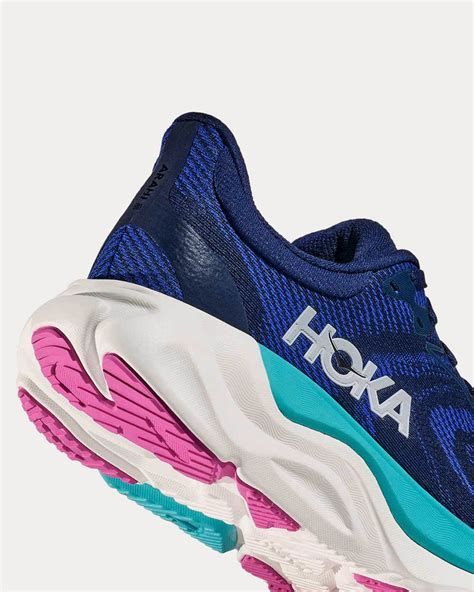
The Arahi 8’s upper is engineered for breathable comfort with a focus on lockdown and heel security. The material selection typically favors lightweight engineered mesh or woven textiles that offer a balance between ventilation and containment. In real-world use—from city pavements to treadmill sessions—the upper adapts well to changes in foot volume caused by heat, humidity, or long runs. Runners with narrow heels but average forefeet will find the heel cup snug and secure; those with wide forefeet should verify the available width options when trying on.
Key buyer concern: sizing. The Arahi series often runs true to size for most brands. However, marathoners or runners with a history of blistering during long efforts should consider a half-size up if toe-splay becomes uncomfortable late in runs. The shoe’s internal structure accommodates orthotic inserts reasonably well, which is important for runners who custom-fit support devices.
Midsole, stability system, and ride
The Arahi 8 continues the line’s commitment to “stability through structure” rather than aggressive posting. The midsole combines a soft, responsive foam with an internal stability framework that directs motion without creating a stiff or punitive sensation. In practical terms, the shoe gives a steady, predictable platform during transitions: initial contact feels cushioned, the midstance is secure, and toe-off retains a springy, efficient feeling for training paces.
For everyday runs, the Arahi 8 is comfortable at conversational paces and remains competent for tempo efforts. It is not designed as a racing flat, but many runners will appreciate its versatility for long runs, recovery days, and steady-state sessions. One important real-world observation: runners who previously avoided stability shoes for their clunky feel often report that the Arahi series preserves natural biomechanics while mitigating excessive collapse.
Discover deals on Electronics — updated daily.
Shop Amazon →Outsole and ground feel
The Arahi 8’s outsole uses durable rubber in high-wear zones and often leaves exposed foam in lower-abrasion areas to save weight. Traction is solid on wet and dry pavement; grip on loose or muddy trails is adequate for brief detours but not intended for dedicated trail running. The shoe’s ground feel is moderately muted—enough cushioning to protect joints on hard surfaces, yet close enough to the ground to retain proprioceptive feedback for stable foot placement.
Durability and materials
Durability is a recurring buyer concern, particularly for runners who log high mileage. The Arahi 8 typically shows steady wear patterns: midsole compression is gradual, and the upper holds up well without rapid thinning or tearing. Outsole rubber in key contact patches slows down wear, though runners who log more than 500 miles per pair should expect the usual midsole softening and tread erosion seen across the industry. For many recreational and club runners, the Arahi 8 will provide at least several hundred miles of dependable performance.
Weight and performance implications
Compared to heavier motion-control shoes, the Arahi 8's relatively light construction improves cadence and reduces fatigue on longer days. This weight advantage also helps maintain smoother transitions during faster intervals. In practice, the shoe balances support with a lively feel; it is well suited for daily training and occasional tempo work but not optimized for maximal speed efforts where a lighter racing model would be preferable.
Real-world use cases
- Daily training for mild to moderate overpronators: Runners seeking a shoe that controls pronation without an intrusive corrective sensation will find it effective for weekday mileage.
- Injury prevention and rehabilitation runs: For athletes recovering from repetitive strain, the Arahi 8’s stable platform and cushioning can help reduce loading while keeping gait mechanics natural.
- Mixed workouts: From easy recovery jogs to medium-tempo runs, the shoe adapts well; it is a strong choice for runners who want a single, versatile trainer.
- Pavement-centric commuting: Those who use running shoes as daily footwear for walking or commuting will appreciate the comfort and stability during prolonged standing or walking shifts.
Pros & Cons
- Pros:
- Lightweight stability that doesn’t feel over-corrective
- Comfortable cushioning suitable for long miles
- Secure heel fit and breathable upper
- Good durability for a trainer in this class
- Versatile—works for daily runs, recovery, and tempo efforts
- Accommodates modest orthotics without significant fit issues
- Cons:
- Not a racing shoe for speed-focused athletes
- Runners with very wide forefeet may find fit restrictive
- Less aggressive traction for off-road use
- Midsole may soften after high-mileage use (as with most foam midsoles)
Comparison
The following table compares the Arahi 8 with two relevant alternatives often considered by stability shoe shoppers: a prior generation in the same family and a competing stability trainer. This table highlights the practical differences buyers typically weigh.
| Model | Primary Strength | Ride Character | Best For | Notes |
|---|---|---|---|---|
| Arahi 8 | Light, structured stability | Soft-cushioned, guided | Daily training, mild overpronation | Balanced for most runners who want support without bulk |
| Arahi 7 | Proven stability, slightly firmer | Predictable, slightly firmer midsole | Runners preferring more feedback | Good baseline to compare feel changes in Arahi 8 |
| Competing Stability Trainer | Pronounced corrective support | Firmer, more corrective | Moderate-to-strong overpronators | Better for runners needing clear mechanical correction |
Buying guide: What to look for when choosing the Arahi 8 (or any stability trainer)
1. Identify your stability needs
Runners often misunderstand the spectrum of stability. There is a difference between mild-guidance models like the Arahi 8 and heavy motion-control shoes that employ rigid posts. A gait analysis—either at a specialty running store or via video analysis—can determine whether the Arahi 8’s structural guidance is appropriate. Those with moderate to severe overpronation may require firmer correction; those with mild collapse will usually benefit from the Arahi 8’s approach.
2. Consider your typical mileage and surfaces
If most miles are on pavement and weekly volume is moderate (under 50 miles), the Arahi 8 should be a strong fit. High-mileage runners or those training for ultras should evaluate midsole longevity and consider rotating with another trainer to extend overall shoe life. Trail-heavy runners should prioritize dedicated trail shoes that offer more aggressive lug patterns and protective uppers.
3. Test fit with the socks and orthotics you use
Always try shoes with the socks you typically run in, and bring any orthotic inserts to test compatibility. Fit in the forefoot should allow natural toe splay—there should be about a thumb’s width of room at the toe box for longer runs. Heel slip indicates either sizing issues or the need for a different last shape; excessive pressure points suggest a different model might be better.
Looking for the best Electronics deals on Amazon?
Browse Now →4. Evaluate cushioning preference
The Arahi 8 sits in the softer end of stability trainers, which benefits joint protection but may reduce ground feedback for some runners. If a runner relies on a very responsive, "bouncy" shoe for tempo work, they should consider supplementing the Arahi 8 with a lighter daily trainer or a dedicated tempo shoe.
5. Check return policy and break-in expectations
Shoes should be tested during an easy run of at least 3–5 miles whenever possible. If the fit or feel is off after that time, take advantage of flexible return policies. Expect a short break-in period for the upper; however, prolonged discomfort or rubbing is a sign to move to a different size or model.
6. Use-case matching
Match the shoe to intended activities: if the priority is consistent support across weekly runs and durability for everyday use, the Arahi 8 is suitable. If the priority is maximal speed or racing performance, pair it with a lighter racing shoe for high-intensity efforts.
Maintenance and practical tips
- Rotate shoes: Using a second pair on alternate days extends midsole life and reduces injury risk.
- Dry naturally: Avoid direct heat sources when drying. Stuffing with newspaper helps retain shape.
- Monitor wear: Check outsole wear and midsole compression every 300–400 miles to plan replacement.
- Clean purposefully: Gentle hand wash with soft brush and mild soap keeps materials intact; avoid machine washing frequently.
How buyers typically weigh trade-offs
Practical shoppers weigh comfort, support, and versatility against weight and price. Many will accept a slightly heavier or firmer shoe if it prevents recurrent issues like shin pain or excessive pronation. Others prioritize lightweight cushioning for tempo runs and gravitate to neutral shoes with added support via custom orthotics. The Arahi 8 appeals strongly to buyers who want a middle ground: noticeable stability without sacrificing an enjoyable, cushioned ride.
Conclusion
The Arahi 8 refines a proven formula: guided stability, comfortable cushioning, and a user-friendly fit. It is particularly well-suited for recreational runners and daily trainers who need reliable support without the heavy-handed feel of older stability designs. While not a race-day specialist, it performs admirably across a variety of runs—from recovery miles to tempo sessions—and adapts to the needs of runners who use orthotics or those looking to prevent injury through better structural guidance. Buyers should prioritize correct sizing, consider mileage and surface, and test the shoe in real running conditions to ensure it meets their personal needs. For runners seeking a contemporary stability trainer that emphasizes comfort and natural mechanics, the Arahi 8 stands as a compelling choice.